
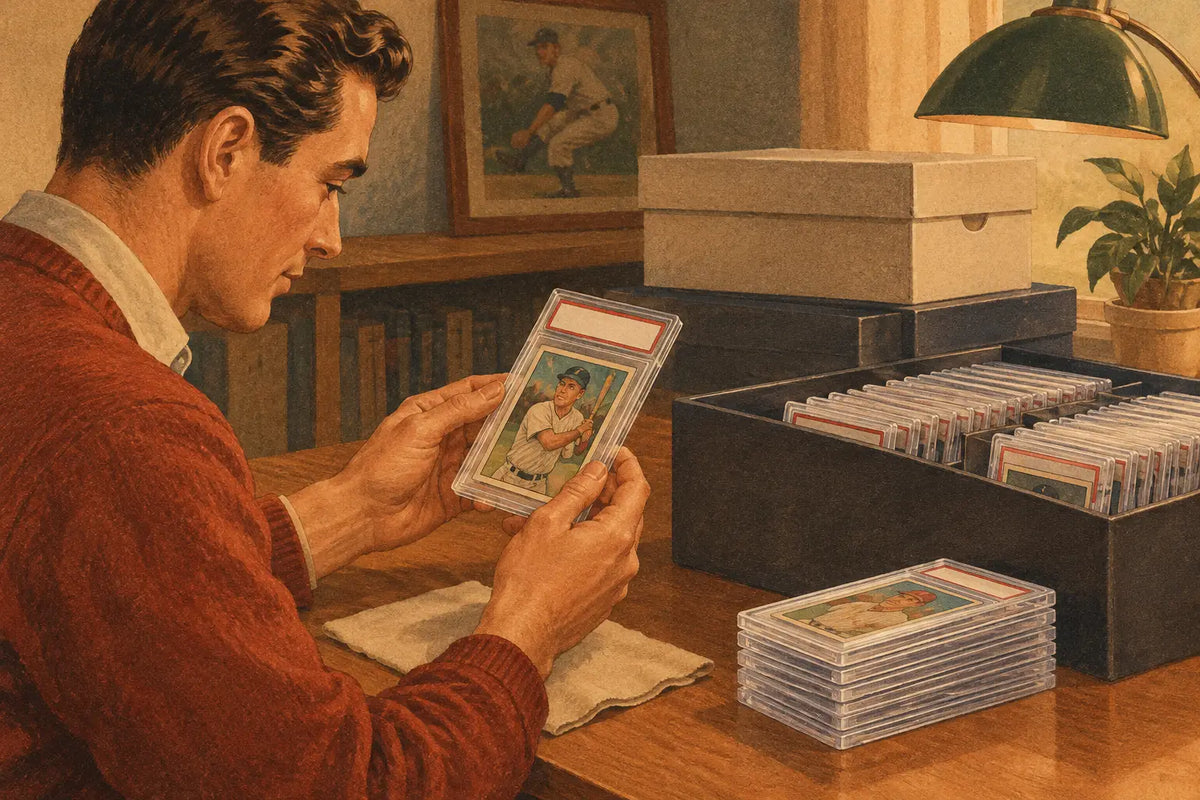
A grade label is not a force field. A graded card is protected from fingerprints, corner wear, and many handling accidents, but the slab itself can still scratch, crack, yellow, collect dust, or suffer from heat and moisture exposure. Knowing how to store graded cards protects both the card inside and the presentation that makes a clean slab so collectible.
Whether you collect vintage sports cards, modern rookie parallels, Pokémon chase cards, or autograph and patch cards, storage should match the size, value, and purpose of your collection. A few smart habits now can prevent the kind of damage that is frustrating to discover years later.
Start With a Stable Storage Environment
The best graded card storage starts before you choose a case or box. Keep slabs in a part of your home with consistent temperature and humidity. A climate-controlled room is far better than an attic, garage, shed, vehicle, or damp basement. Those spaces can swing from hot to cold quickly, and humidity can rise without warning.
Heat does not usually destroy a slab overnight, but prolonged exposure can affect labels, create warping concerns, and make plastic more vulnerable over time. High humidity can encourage moisture issues around labels and packaging, while extreme dryness can make some plastic materials more brittle. Aim for a comfortable indoor environment - roughly the same conditions where you would want to spend time yourself.
Keep graded cards away from direct sunlight, too. Sunlight is hard on ink, paper, and autographs. Even though the card is encapsulated, UV exposure can still fade a card or signature over the long haul. A display shelf near a bright window may look great for a season, but it is not a permanent home for a meaningful card.
Use Slab Sleeves to Prevent Surface Scratches
A graded card can be technically secure inside its holder and still lose eye appeal from a scratched slab. Fine scratches, scuffs, and cloudy plastic do not change the numerical grade, but they absolutely affect how a card looks in hand, in photos, and when it is time to sell or trade.
Clear slab sleeves are a simple first layer of protection. Choose sleeves made for the dimensions of your holder, and make sure they fit without bunching at the corners or putting pressure on the slab. Before sliding a card into a sleeve, wipe the outside of the holder carefully with a clean microfiber cloth. If dust or grit is trapped inside the sleeve, every bit of movement can leave more surface marks.
Sleeves are especially useful for cards that travel to shows, trade nights, or card shop visits. They also help when slabs sit next to each other in a storage box. For display pieces that never leave a case, a sleeve is still worthwhile if the card may be handled regularly.
Choose the Right Box for Your Graded Cards
Loose slabs in a drawer are an accident waiting to happen. The right storage box keeps cards upright, limits movement, and makes it easier to find a specific card without shuffling through your whole collection.
For a smaller group of favorites, a rigid graded-card case with foam slots offers excellent protection. These cases work well for transporting higher-end cards, taking submissions to a hobby shop, or keeping a focused collection secure. Look for dense foam cut to fit standard slabs, with a dependable latch and enough room that cards are not forced into place.
For larger collections, use a dedicated graded-card storage box designed to hold slabs vertically. A long box or modular storage case is practical because it can grow with the collection. Place cards in rows with snug dividers so they stay standing without being squeezed together. The goal is controlled support, not compression.
Do not overfill any box. If you have to force the lid closed, the box is too full. Pressure on the outer slabs can lead to scratches, cracked corners, or stress along the edges of the holders. Leave a little room for safe access, then use dividers or inert foam spacers to keep the row from tipping.
Store Slabs Upright, With Support
Most graded cards are best stored vertically in purpose-built boxes or cases. Upright storage makes sorting easier and reduces the risk of a heavy stack pressing on the cards below it. It also lets you flip through slabs by the label without dragging one holder across another.
The key is support. A partially filled box can allow slabs to lean at an angle, which puts unnecessary pressure on corners and makes it easier for cards to shift when the box moves. Use dividers at the ends of each row and add a spacer when needed.
Avoid tall, unsupported stacks on a desk or shelf. A short stack might be fine while you are organizing a mail day, but it should not become permanent storage. One accidental bump can send a stack to the floor, and even a strong slab can crack when it lands on a hard edge.
Keep Dust, Moisture, and Household Risks Away
A closed case is helpful, but storage location matters just as much. Keep your graded-card boxes off the floor, especially in areas that could see water from a leak, storm, pet bowl, or cleaning mishap. A sturdy shelf, closet shelf, or cabinet is a much safer choice.
If you use a cabinet, avoid placing slabs near exterior walls that get hot, cold, or damp. Do not store them beside household chemicals, scented products, or anything that can leak or give off strong fumes. The cards may be encapsulated, but labels, packaging, and the storage materials around them do not need that exposure.
For long-term storage, a small desiccant pack in the outer storage container can help manage moisture. Keep it separated from the slabs and replace it according to its instructions. Desiccant is a backup, not a substitute for climate control. If a room is consistently damp, fix the room before trusting a packet to protect a collection.
How to Store Graded Cards on Display
Displaying graded cards is one of the best parts of collecting. A favorite player, a rare parallel, or a personal grail should not have to live unseen forever. The trade-off is that display cards need more protection from light, dust, and accidental contact.
Use a stable stand or display case that holds the slab securely from the bottom. Keep displays away from windows, heating vents, kitchens, and high-traffic spots where a card can be knocked over. If the collection is in a family room or game room, place valuable slabs high enough that children, pets, and passing bags cannot reach them.
Rotate what you display. This gives more cards their moment while reducing long-term light exposure for any one piece. For autographs, vintage cards, and cards with sensitive surfaces, short display periods in low light are the safer choice.
Handle Every Slab Like It Is High End
Even if a card is not a major centerpiece, careful handling preserves its condition and saves you from avoidable replacement costs. Pick up slabs by the edges, use clean and dry hands, and set them down on a soft, clear surface. Avoid eating, drinking, or opening shipping boxes directly over your cards.
When moving several graded cards, use a fitted case rather than carrying a loose stack. For a single slab, a sleeve plus a small rigid case gives better protection than slipping it into a pocket or bag. Never leave cards in a hot car while running errands. Interior temperatures can climb fast, even on a mild North Florida day.
If a holder arrives scratched or cracked, separate the issue into two questions: Is the card inside still secure, and is the holder hurting the card's presentation or safety? A light surface scuff may only be cosmetic. A cracked slab, loose card, or compromised seal deserves prompt attention from a trusted grading-service resource.
Organize Before the Collection Gets Bigger
Good storage is easier when you can locate a card quickly. Label boxes by sport, game, set, year, player or character, or value tier. The best system is the one you will actually maintain. A collector with a few dozen slabs may prefer broad categories, while a large collection may need box numbers and a detailed inventory.
Record the card's identifying information, certification number, condition designation, and storage location. Photos are useful, particularly for higher-end cards, serial-numbered parallels, and autographs. This makes insurance records, sale decisions, trade discussions, and collection management much easier.
For collectors using a submission-tracking service, keep newly returned cards separate until you have verified each label and logged the card. That small pause prevents a fresh return from disappearing into the wrong box or getting mixed with cards you planned to sell, consign, or display.
Your collection should be easy to enjoy, not hidden in a pile of risky storage shortcuts. Give each slab a clean sleeve, a stable spot, and a box that fits its job. Then when the next great card joins the collection, you will already have a safe place waiting for it.